What Is Third-Party Motor Insurance? Coverage, Eligibility & Claims
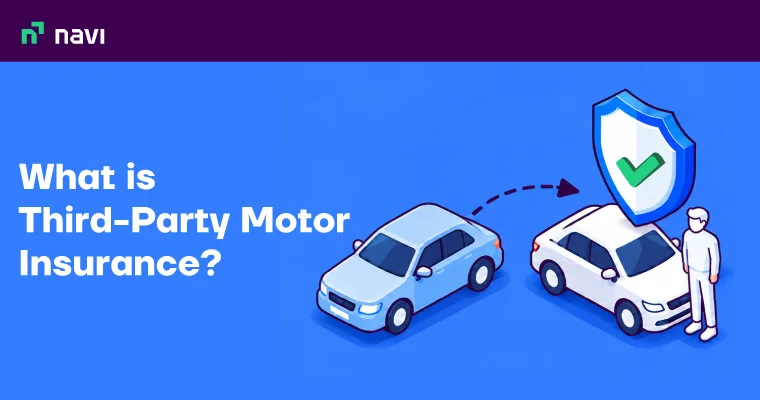
Direct answer: Third-party insurance is a motor insurance policy that covers damage or injury you cause to another person, vehicle, or property while driving your car, two-wheeler, or commercial vehicle. You cannot control other drivers, pedestrians, or traffic around you, but you can control whether an accident turns into a financial crisis. It is also the legal minimum every registered vehicle in India must carry under the Motor Vehicles Act, 1988. You can buy a third-party policy online in minutes through the Navi app.
Key Takeaways
- Third-party insurance is mandatory for every registered vehicle in India under the Motor Vehicles Act, 1988.
- It covers liability towards third-party injury, death, and property damage, but does not cover your own vehicle or personal injuries.
- Premiums are fixed by IRDAI, so the cost depends only on your vehicle type and engine capacity, not your insurer.
- Third-party compensation claims are filed by the affected person through the Motor Accident Claims Tribunal (MACT), not by the policyholder.
- Driving without valid cover risks a ₹2,000 to ₹4,000 fine and full personal liability if you cause an accident.
- You can buy, renew, or download this policy through the Navi app in minutes, for any vehicle type.
What Is Third-Party Motor Insurance?
Third-party motor insurance protects you from financial and legal liability when your vehicle causes damage, injury, or death to someone else.
The Insurance Regulatory and Development Authority of India (IRDAI) regulates this policy and fixes its premium through a tariff. This means the price of third-party motor insurance depends only on your vehicle type and engine capacity (cc), not on your insurer. Every car, two-wheeler, and commercial vehicle follows the same tariff rules.
Third-party insurance does not cover damage to your own vehicle. For that, you need an Own Damage policy or a comprehensive motor insurance policy that combines both third-party and own damage cover.
What Does Third-Party Motor Insurance Cover?
Third-party motor insurance covers your legal and financial liability if your vehicle injures someone, causes a death, or damages someone else’s property.
For example, if you’re driving a car and you accidentally hit a parked vehicle at a signal, your third-party cover pays for the damage to that vehicle. If you’re riding a two-wheeler and you accidentally hit a pedestrian while crossing a busy junction, this cover pays for their medical treatment and any legal claim that follows.
In both cases, this policy protects you from paying these costs out of your pocket.
What Does Third-Party Motor Insurance Not Cover?
Third-party motor insurance does not cover:
- Damage to your own vehicle: If your car or two-wheeler gets damaged in an accident, you will have to pay for the repairs yourself.
- Personal injuries to the driver: This policy protects the other person involved in the accident, not you. If you get hurt while driving, you need a separate Personal Accident cover to pay for your treatment.
- Normal wear and tear: Ageing parts, rust, or general depreciation happen over time on their own. No motor insurance policy, including this one, covers this kind of damage.
- Mechanical or electrical breakdown: If your engine fails or a part malfunctions on its own, without any accident involved, this policy will not pay for the repair.
Who Is Eligible for Third-Party Insurance?
Every registered vehicle owner in India needs third-party insurance. This applies whether you own a car, a two-wheeler, a commercial vehicle, or an electric vehicle.
Navi sells third-party insurance as separate policies for different vehicle types. If you own a car, you can buy Navi Private Car Liability Only Insurance. If you own a two-wheeler, you can buy Navi Two Wheeler Liability Only Insurance.
Is Third-Party Insurance Mandatory?
Yes. Third-party insurance is mandatory for every registered vehicle in India under the Motor Vehicles Act, 1988. You cannot legally drive any registered vehicle without it.
Driving with an expired or missing third-party policy is a punishable offence. Under Section 196 of the Motor Vehicles Act, 1988, you can be fined ₹2,000 for a first offence and ₹4,000 for a repeat offence. In some cases, this can also lead to imprisonment of 3 months.
Beyond the fine, there’s a bigger risk. If you cause an accident while uninsured, you’re personally liable for every rupee of damage or injury to the other party.
How Does Third-Party Insurance Differ From Own Damage or Comprehensive Insurance?
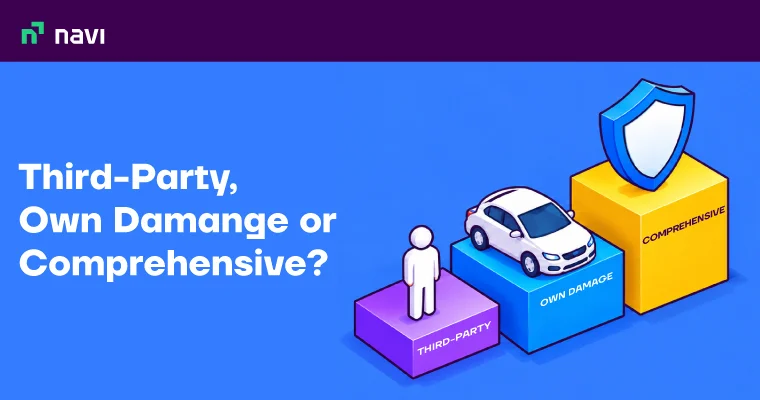
| Feature | Third-Party | Own Damage (OD) | Comprehensive |
| Covers third-party injury, death, and property damage | ✅ | ❌ | ✅ |
| Covers your own vehicle | ❌ | ✅ | ✅ |
| Covers theft, fire, and natural calamities | ❌ | ✅ | ✅ |
| Legally mandatory | ✅ | ❌ (Optional) | ❌ (Optional) |
| Excludes wear and tear / mechanical breakdown | N/A (as third-party insurance does not cover your own vehicle) | ✅ Excluded | ✅ Excluded |
| Claims may be rejected for illegal driving | ✅ | ✅ | ✅ |
Navi lets you buy third-party insurance through its app online. The process requires minimal documentation, has no middlemen, and gives you instant access to your policy after purchase. The process stays the same whether you’re insuring a car or a two-wheeler.
Here’s how it works:
- Download the Navi app from the Play Store or App Store and sign up.
- Enter your vehicle’s registration number or other basic details
- Get an instant quote based on your vehicle type and engine capacity.
- Make the payment securely within the app.
- Get your policy instantly with minimal paperwork.
This entire process works from anywhere in India, on any registered vehicle.
Third-party claims don’t work like Own Damage claims. Navi’s cashless and reimbursement process applies when you’re claiming for damage to your own vehicle, not for a third-party liability claim.
For a third-party claim, the affected person (the third party) is the one who files the claim. This goes through the Motor Accident Claims Tribunal (MACT), not through Navi directly.
As the policyholder, your role is to notify Navi as soon as the accident happens and file an FIR at the nearest police station, especially if the accident caused injury or death.
You should also submit any documents Navi requests during the claims process.
This process is the same whether you were driving a car, a two-wheeler, or a commercial vehicle.
To report the accident, you can contact Navi’s toll-free number at 7406012341. Once the accident has been reported, the next thing to have ready is your documents.
What Documents Do You Need to File a Claim for Third-Party Insurance?
When insurers like Navi request documents to support a third-party claim, you’ll typically need to provide:
- A copy of the FIR filed for the accident.
- Your policy number or policy copy as proof of insurance.
- Your vehicle’s registration certificate (RC).
- Your driving license, valid at the time of the accident.
- Any medical bills or repair estimates the third party has submitted, if Navi asks you to forward them.
Third-party insurance premiums are fixed by IRDAI, so you’ll pay the same premium for the same vehicle category, no matter which insurer you choose. So now, the difference is all about how easy it is to buy your policy, manage it, and get support when you need it.
With Navi, you can:
- Buy your policy completely online through the Navi app in just a few steps.
- Get your policy issued quickly with minimal documentation.
- Pay transparent prices with no hidden charges or middlemen.
- Access your policy instantly after purchase from anywhere in India.
- Get 24/7 claims support from a dedicated claims relationship manager.
- Add a Personal Accident cover to your third-party insurance policy for additional financial protection.
Whether you’re insuring a car, a two-wheeler, or a commercial vehicle, you can buy and manage your policy entirely through the Navi app.
Conclusion
Third-party insurance is the minimum legal cover every registered vehicle owner in India must have. While it protects you against financial liability arising from third-party injury, death, or property damage, it does not cover damage to your own vehicle. If you need broader protection, you can add an Own Damage policy or choose a comprehensive motor insurance policy. Before buying, compare your coverage needs and make sure the policy matches the way you use your vehicle.
FAQs
Yes, you can buy third-party insurance entirely through the Navi app, without visiting a branch or dealing with an agent.
Yes. Once your payment is made, Navi issues your policy document instantly, so you’re covered right away.
Yes. You can renew your third-party policy online through the Navi app before it expires, without any branch visit.
Yes. The process is the same for both motorcycles and cars. Just enter your vehicle details, get an instant quote, make the payment, and your policy will be issued online.
You can download your policy document directly from the Navi app right after purchase. It’s also sent to your registered email.
IRDAI fixes third-party premiums through a tariff based on your vehicle type and engine capacity (cc). This means the same premium applies to all insurers for the same vehicle.
You can be fined ₹2,000 for a first offence and ₹4,000 for a repeat offence under Section 196 of the Motor Vehicles Act. If you cause an accident while uninsured, you’re personally liable for the third party’s damages or injuries.