Third-Party vs Own Damage vs Comprehensive Insurance: Which One Should You Buy?
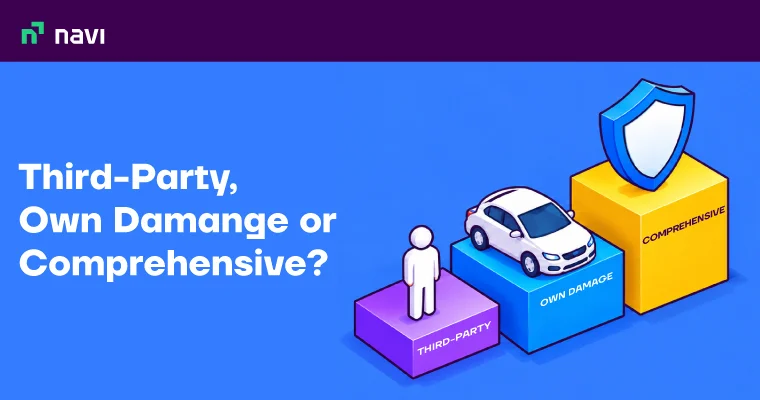
Direct answer: Every vehicle owner in India must choose among three types of motor insurance: third-party, own damage, and comprehensive. Third-party insurance is the basic coverage required by law. It covers damage your vehicle causes to other people or their property. Own damage insurance covers repairs to your own vehicle, but you need a third-party policy alongside it. Comprehensive insurance combines both, covering your vehicle and your liability toward others in a single plan. Insurers like Navi offer all three options, so you can choose the coverage that best matches your vehicle’s age, your budget, and how much risk you’re comfortable taking.
Key Takeaways
- Third-party insurance is legally mandatory in India, but it only covers damage your vehicle causes to other people.
- Own damage insurance protects your vehicle from accidents, theft, and natural disasters, but it can only be bought alongside a valid third-party policy.
- Comprehensive insurance combines both third-party and own damage cover into one policy, which is why most vehicle owners find it the best option.
- The right choice depends on your vehicle’s age, its value, and how much repair cost you’re willing to pay out of your own pocket.
- No matter which insurance policy you choose, renewing it on time and selecting the right add-ons is just as important as choosing the right cover.
What Is Third-Party Insurance?
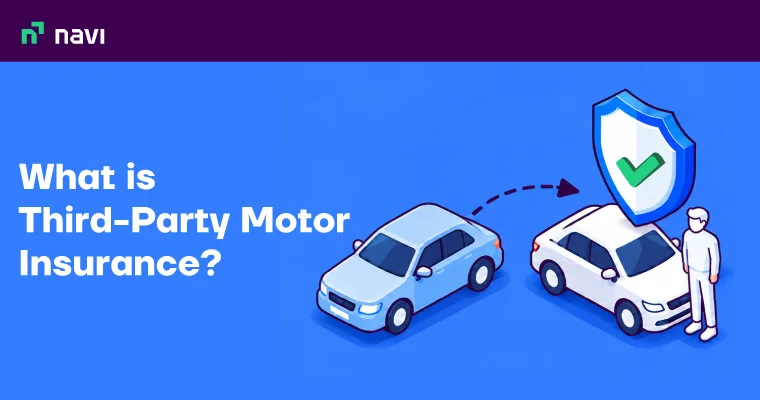
Third-party insurance is the minimum legal insurance cover required for every vehicle in India. It protects you if your vehicle causes injury, death, or damage to someone else.
However, it does not cover damage caused to your own vehicle.
For example: If your car or bike gets damaged, dented, or stolen, a third-party policy won’t cover it.
Third-party insurance is mandatory under the Motor Vehicles Act, 1988. Driving without valid third-party insurance can lead to a fine of up to ₹2,000 for a first offence and up to ₹4,000 for a repeat offence. Depending on the case, you may also face imprisonment of up to 3 months.
Third-party insurance premiums are fixed by IRDAI (India’s insurance regulator) and are based on factors like your vehicle’s type and its engine size (cc). That means you’ll pay the same third-party premium for the same vehicle, no matter which insurer you choose.
What Is Own Damage (OD) Insurance?
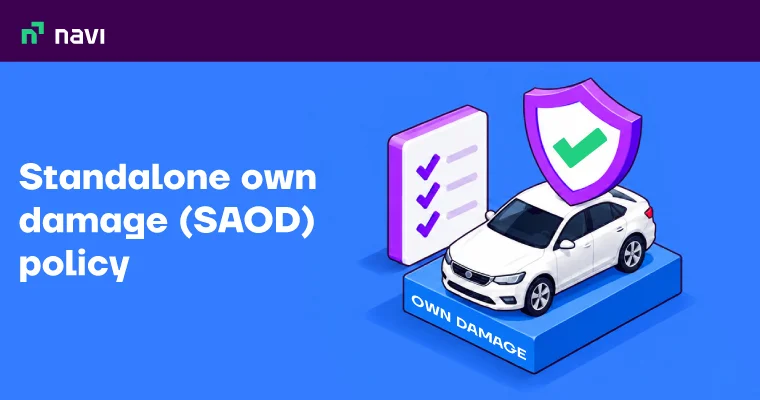
Own Damage insurance protects your own vehicle against damage caused by accidents, fire, theft, or natural disasters like floods and storms.
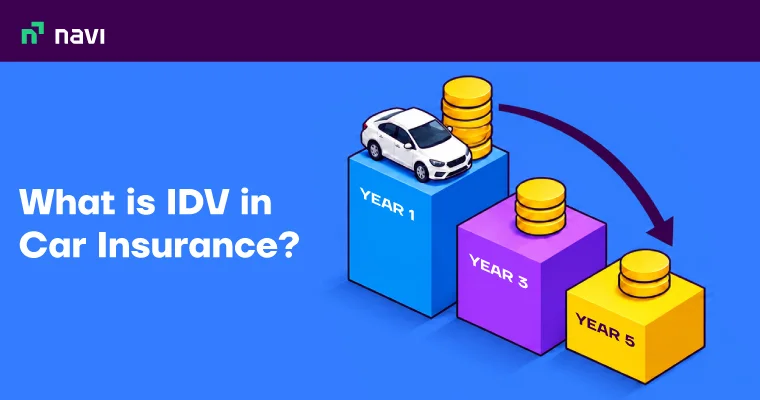
Unlike third-party premiums, which IRDAI sets, your own damage premium is set by the insurer and depends on your vehicle’s Insured Declared Value (IDV), age, engine size, and any add-ons you choose. This is also why own damage premiums vary from one insurer to another, while third-party premiums don’t.
Own damage (OD) insurance does not cover third-party liabilities, so you still need a valid third-party policy in place. It also doesn’t cover normal wear and tear, pre-existing damage, or accidents that happen while using a private vehicle for commercial purposes. Claims are also rejected if the driver was breaking the law, like driving without a valid licence or after consuming alcohol or drugs.
What Is Comprehensive Insurance?
Comprehensive insurance is a single policy that combines both third-party liability and own damage cover.
Just like own damage (OD) insurance, comprehensive insurance also does not cover regular wear and tear, pre-existing damage, commercial use of a private vehicle, or claims made after illegal driving.
Third-Party vs Own Damage vs Comprehensive: What’s the Difference?
| Feature | Third-Party | Own Damage | Comprehensive |
| Covers damage to others | Yes | No | Yes |
| Covers damage to your own vehicle | No | Yes | Yes |
| Mandatory by law | Yes | No | No (but strongly recommended) |
| Can be bought standalone | Yes | Only if you already have third-party insurance cover | Yes |
| Premium set by | IRDAI (same across insurers) | Insurer (varies by vehicle, IDV, add-ons) | Insurer (varies) |
| Add-ons available | No | Yes | Yes |
| Covers theft, fire, natural disasters | No | Yes | Yes |
Which One Is Better: Comprehensive or Third-Party?
If your goal is simply to meet the legal requirement, third-party insurance alone is enough. However, if your vehicle gets damaged or stolen, third-party insurance won’t cover it.
For example, imagine your car is involved in an accident, and both your car and another person’s car are damaged.
- Third-party insurance: Covers the other person’s vehicle. You pay for your own car’s repairs.
- Own damage (OD) insurance: Covers your own car’s repairs. It doesn’t cover damage to the other person’s vehicle.
- Comprehensive insurance: Covers both your own vehicle and damage caused to the other person’s vehicle under a single policy.
For most people, comprehensive insurance offers far more real-world protection, especially if your vehicle is new, expensive to repair, or you drive frequently in traffic-heavy areas.
For Car Owners: Which Policy Should You Choose?
The best policy depends on your car, your budget, and how much financial risk you’re willing to take.
Here’s a simple guide to help you choose the right policy based on your situation:
- New car, car under loan, or an expensive model: Choose comprehensive insurance. It offers the highest level of protection by covering both your own car and third-party liabilities.
- Older car with a lower resale value: Consider own damage (OD) insurance along with your existing third-party policy. It protects your car at a lower cost than a comprehensive plan.
- Older car with a very tight budget: Third-party insurance alone meets your legal requirement, but it won’t cover damage to your own car.
If you’ve bought a new car, it usually comes with a long-term third-party policy for the first 3 years, as required by law. This rule exists so that new car owners always stay covered in their initial years, even if they forget to renew on time.
If you’re looking for car insurance, Navi offers all three options:
- Private Car Package Insurance (Comprehensive)
- Private Car Liability Only Insurance (Third-Party)
- Private Car Own Damage Insurance
For Bike Owners: Which Policy Should You Choose?
Just like car insurance, the best policy for your bike depends on its age, value, and your budget.
Here’s a simple guide to help you choose the right policy:
- New bike or a premium model: Choose comprehensive insurance. It protects your bike and covers your liability toward others.
- Daily commuters: Own damage cover (as part of comprehensive insurance) is usually the best option, as it covers your bike against accidents and theft.
- Older bike with a very tight budget: Third-party insurance alone can meet the legal requirement, but it won’t cover damage to your own bike.
Most new bikes come with a long-term third-party policy for the first 5 years, as required by law.
If you’re looking for bike insurance, Navi offers all three policies:
- Two Wheeler Package Insurance (Comprehensive)
- Two Wheeler Liability Only Insurance (Third-Party)
- Two Wheeler Own Damage Only Insurance
What Add-Ons Can You Attach to Each Policy Type?
Add-ons give you extra protection beyond your standard insurance cover.
However, you can only add them to own damage (OD) or comprehensive insurance, not to a standalone third-party policy.
Some of the add-ons Navi offers include:
- Zero Depreciation Cover: Reduces depreciation deductions on replaced parts, so you get a higher claim payout.
- Engine Protection Cover: Covers engine damage caused by water entering the engine (like during floods) or oil leakage.
- Roadside Assistance: Provides help if your vehicle breaks down, gets a flat tyre, or needs towing.
- Consumables Cover: Covers the cost of items like engine oil, nuts, bolts, and lubricants used during repairs.
- NCB Secure: Protects your No Claim Bonus even if you make a claim.
- Return to Invoice Cover: Pays your vehicle’s invoice amount if it’s stolen or declared a total loss.
- Compulsory Personal Accident Cover: Provides financial protection to the owner-driver in case of accidental injury or death.
Note: The add-ons available may vary depending on your vehicle and the insurance plan you choose.
Why Does Your Own Damage Cover Expire Every Year, Even With Long-Term Third-Party Insurance?
Your own damage (OD) cover expires every year because it is renewed separately from your long-term third-party insurance. So, even if you buy both together under a bundled policy for a new car or bike, they follow different renewal periods.
A bundled policy is a type of comprehensive policy designed for new vehicles. It combines long-term third-party insurance with own damage cover in a single purchase.
With a bundled policy, your third-party insurance stays valid for its full term – usually 3 years for a new car and 5 years for a new bike. However, the own damage cover must be renewed every year. That’s why you may receive a reminder to renew your own damage cover even though your third-party cover is still active.
Navi offers Private Car Insurance Bundled and Two Wheeler Insurance Bundled plans, which combine long-term third-party cover with annual own damage cover.
What Happens If You Don’t Renew Your Insurance Policy On Time?
If you don’t renew your policy on time, you could lose your No Claim Bonus (NCB). NCB is a discount on your own damage premium that you earn for not making any claims during your policy period. This discount increases every claim-free year. However, if you don’t renew your policy within 120 days of it expiring, you’ll lose all of your earned NCB. Renewing your policy on time not only keeps your insurance active but also protects the discount you’ve earned.
Buying your policy with Navi is super simple:
- Download the Navi App from the Play Store or App Store
- Share your vehicle registration number or other basic details
- Get an instant quote based on your vehicle information
- Make your payment securely through the app
- Get your policy instantly
And if you ever need to file a claim, Navi keeps that simple too.
Cashless Claim Process:
- Call the Navi toll-free number (7406012341) to register your claim
- Navi arranges an inspection to capture the damage details and photos
- Once approved, get your vehicle repaired at a Navi network garage
- Navi settles the amount directly with the garage
Reimbursement Claim Process:
- Call the Navi toll-free number (7406012341) to register your claim
- Navi inspects the vehicle and approves the estimated damages
- Get your vehicle repaired at your preferred garage
- Once verified, Navi transfers the approved amount directly to your bank account
Conclusion
Third-party insurance keeps you legally covered. Own damage insurance protects your vehicle. Comprehensive insurance gives you both types of protection. Whichever policy you choose, make sure you renew on time, understand what’s excluded, and pick add-ons that actually match how you use your vehicle.
FAQs
No. Own damage insurance is optional, but you can only buy it as a standalone policy if you already have valid third-party insurance in place.
Yes, comprehensive insurance covers damage caused by floods and storms through its own damage cover.
It’s illegal, and you could face a fine of up to ₹2,000 for the first offence and ₹4000 for a repeat offence. In some cases, you may also face 3 months’ imprisonment. If you cause an accident while uninsured, you’re personally liable for all the damages.
Yes, in most cases NCB is linked to you as the policyholder, not the insurer, as long as you provide proof of your NCB entitlement.
No. Theft of your vehicle is only covered under own damage or comprehensive insurance.
Yes, if you already have third-party insurance, you can add own damage (OD) cover by either upgrading to a comprehensive policy or buying a standalone own damage policy. In most cases, you can do this when you renew your policy. Your insurer may also inspect your vehicle before adding the new cover.
You can check your policy’s validity through the government’s VAHAN portal using your vehicle registration number, or by checking your policy document or insurer’s app directly.