Why Should You Take Personal Loan for Car Finance – Feature and Benefits

Owning a car is a significant milestone in a person’s life. So it is no wonder that most people aspire to purchase one but lack the finances to do so. Auto finance can help you get a new set of wheels without the need to drain your savings.
A regular car loan may not provide 100% of the cash needed to buy a car. As an alternative, you can avail of a personal loan to get access to sufficient funds for financing the purchase of your favourite model. You also do not have to worry about losing the car in case of a default.
Now let us look at personal loans for automobile financing in more detail.
What Is a Personal Loan and How Can You Use It?
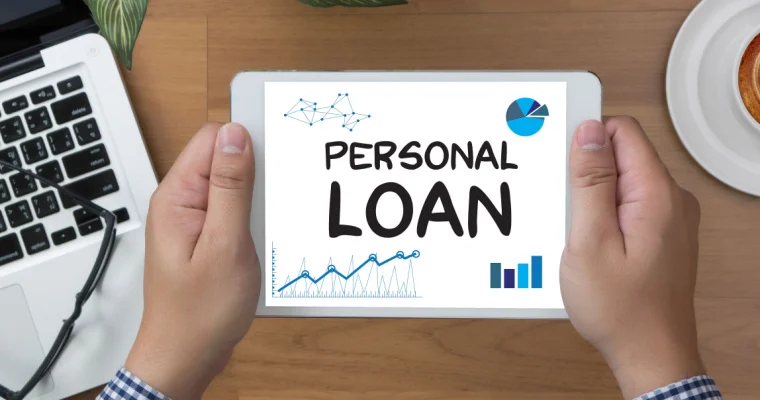
A personal loan is an unsecured form of financing that comes with no end-use restrictions. Borrowers can use the loan amount for any financial need without worrying about the financial institution monitoring the usage. Thus, you can use them for any purpose, including home renovation, family vacation, meeting medical expenses and more.
Personal loans are not secured against any asset, unlike car loans. Instead, financial institutions and banks provide them based on the applicant’s credit score, monthly income, repayment capacity, employment history, etc. The interest rates on personal loans are usually higher than home loans or gold loans due to their greater perceived risk.
Defaulting on a personal loan does not lead to the sale of the asset bought (like a car) for recovering dues. That said, it still has its adverse effects as the credit score of the borrower drops. This leads to the defaulter being unable to apply for credit cards or other loans in the future.
Instant Personal Loan Details
| Loan Amount | Up to ₹20 Lakh |
| Interest Rate | 9.9% to 45% p.a |
| Foreclosure Fee | Nil |
| Tenure | Up to 72 months |
Features and Benefits of Using Personal Loans for Auto Finance
1. High-value Loans for any needs
Financial institutions offer high loan amounts for personal loans, provided that you meet the eligibility criteria. The loan amount sanctioned depends on the applicant’s monthly income, existing liabilities and credit score. Lenders offer the highest loan amount to those who have a high credit score and restrict the EMI to 40-50% of the applicant’s total income.
Navi offers cash loans of up to Rs. 20 lakh, ensuring a hassle-free application process and fast disbursal. You can download the Navi app to apply for a personal loan and meet your urgent financial requirements with ease.
2. Quick and Easy Disbursal
As personal loans do not require much documentation, they are disbursed relatively faster. Some financial institutions offer instant approval through a paperless process, making it ideal for financial emergencies.
3. Simple eligibility criteria
Although the requirements vary from one financial institution to another, the eligibility criteria for personal loans is simple. You only need to have a regular income with proof and be within a specific age limit to qualify for a personal loan to buy a car.
4. No collateral required
Since personal loans are unsecured in nature, you do not have to put your valuables at stake to access funds. Moreover, applicants lacking assets like a home or jewellery can get sufficient funds for automobile financing.
5. Minimal documentation
You do not need to furnish many documents to get a personal loan. You only have to furnish proof of identity, address proof and proof of income along with a passport size photograph, and that is it.
Calculate Your Personal Loan EMI
Loan Amount
Rate of Interest (P.a)
%
Loan Tenure (Years)
Years
Monthly EMI
0
Total Interest
Total Amount
Also Read


Why Choose a Personal Loan for Automobiles instead of Auto Finance?
Auto loans are secured loans that you can use only for purchasing a vehicle, with the vehicle itself used as collateral. On the other hand, personal loans are incredibly versatile, and you can use the funds for any purpose, including buying a car. The following are reasons to choose a personal loan over traditional auto finance:
- You can get much faster access to cash than auto finance as personal loans have a fast and easy approval process. This is helpful as you do not have to find a vehicle first to access cash.
- Auto finance companies hesitate when it comes to offering loans for project cars. This includes vintage cars, damaged cars, etc. Personal loans are the only way to finance the purchase of such vehicles.
- It is difficult to get auto loans for buying vehicles from individuals or through advertisement websites. A personal loan places no such restrictions.
- You can use a personal loan to buy a car along with accessories, gadgets, etc.
- There is no need to worry that the lender would take away your car in case of a default.
Final Word
Auto finance is a type of secured loan that you can avail only to buy a car. On the other hand, a personal loan is an easy and practical solution for meeting all kinds of expenses as it does not come with end-use limitations. One can make additional purchases while purchasing the car and even meet other expenses by using the loan amount.
You may want to compare interest rates, your budget and monthly income before applying for a personal loan to buy a car. This will help you to repay the loan via EMIs without any hassle.
FAQs
Ans: Your credit score is important as it decides the loan amount you are eligible for and its interest rate. A higher credit score means that you have paid your previous dues properly, which makes you a safe borrower, leading to better loan terms.
Ans: In the case of a flat interest rate, the borrower pays interest on the entire loan balance throughout its entire tenure. As a result, the interest payable does not decrease with regular payments. For reducing rates, the borrower pays interest only on the outstanding amount.
Ans: In some cases, you may have the option to transfer your balance loan amount (the amount yet to be repaid) from the current lender to a new one. The new loan provider will pay off your debt to your old lender, and you will owe your new loan provider the payments plus applicable interest.
Ans: A major portion of the EMIs you pay goes towards paying the interest on your personal loan. This concept, where you repay only a small portion of the principal initially, is front loading. In the later years of repayment, your principal repayment increases while the interest payment decreases.
Ans: Since borrowers do not provide any collateral, lenders check the applicant’s employment status and annual income before approving a personal loan. You need to be employed in the current organisation for at least a year and have sufficient income for EMI payments to be eligible. That said, the eligibility criteria vary from one lender to another.
Personal Loan in Your City